
The Volatile Market
In the volatile market of 2026, the traditional corporate hierarchy isn’t just “old-fashioned”—it’s a liability. As AI-driven market shifts and global supply chain fluctuations become the daily norm, the “Command and Control” structures of the past are fracturing under the pressure of their own rigidity.
The winners of this era? Modular Organizations.
The Speed of Adaptation: Hierarchy vs. Modules
The core difference between a rigid hierarchy and a modular model comes down to latency.
In a Rigid Hierarchy, information must travel up the chain, a decision must be made at the top, and instructions must filter back down. By the time the “boots on the ground” receive the order to pivot, the market opportunity has often already vanished.
In a Modular Business Model, the organization is composed of semi-autonomous “cells” or “modules.” Each module has its own P&L, its own AI-assisted decision-making tools, and the authority to pivot instantly based on local data.
Why Modules Outperform in 2026:
- Zero-Lag Decision Making: Modules don’t wait for “Headquarters” to approve a shift in strategy. If a local AI agent detects a change in customer sentiment, the module adapts its output in real-time.
- Containment of Failure: In a rigid system, a failure in one department often creates a bottleneck that paralyzes the whole company. In a modular system, a “failing” module can be swapped, upgraded, or retired without destabilizing the rest of the ecosystem.
- Scalability on Demand: Modular firms can “plug in” new capabilities—like a new specialized AI unit or a strategic partner—in weeks, not years.
The “Lego” Strategy: Composable Business
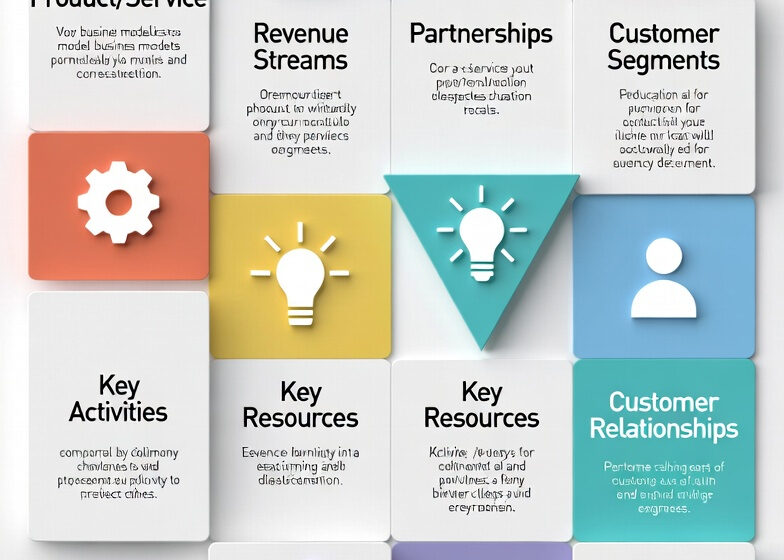
We are now living in the era of the Composable Business. This means your company isn’t a single, solid block; it’s a collection of high-functioning Legos.
“In 2026, agility isn’t about how fast you can run; it’s about how quickly you can reconfigure your shape.”
Key Elements of the 2026 Modular Leader:
- Distributed Authority: Moving from “Who has permission?” to “Who has the data?”
- API-First Operations: Every department interacts with others through clear, standardized protocols (just like software), reducing friction and “meeting fatigue.”
- Agentic Support: Each module utilizes Agentic AI to handle the heavy lifting of logistics and data, freeing humans to focus on the creative “Pivot.”
Conclusion: Adapt or Atrophy
The “Monoliths” of the 20th century are being outpaced by smaller, nimbler, and more modular competitors. To survive the rest of the decade, leadership must stop trying to control every movement and start orchestrating an ecosystem of independent, high-speed modules.
The question for your leadership team today is simple: If your market disappeared tomorrow, how many pieces of your business could you plug into a new one by Monday?
Share this content: