

In an era where market shifts happen in weeks rather than years, the traditional hierarchical “command and control” model has become a liability. For a CEO, the most dangerous bottleneck in the company is often their own office.
When every strategic pivot or significant expenditure requires a journey up the corporate ladder, your response time is dictated by bureaucracy, not opportunity. To survive the next decade, leadership must shift from being the chief decision-maker to the chief environment-builder.
The Cost of the “Escalation Loop”
In a centralized structure, front-line intelligence must be filtered through layers of management before it reaches a level with the authority to act. By the time a decision is handed back down:
- The data is stale: The market has already moved.
- The context is lost: Those with the most “authority” often have the least “information” about the specific customer pain point.
- The culture is eroded: High-performing talent leaves when they feel like “order-takers” rather than problem-solvers.
Strategy 1: Replace Permission with Principles
Decentralization doesn’t mean chaos; it means high alignment through shared principles. Instead of approving specific tactics, the CEO’s job is to define the “Commander’s Intent”—a clear, concise goal and the boundaries (guardrails) within which teams can operate.
The Litmus Test: If your teams can’t make a $50,000 decision without your signature, you haven’t built a scalable business; you’ve built a high-stakes hobby.
Strategy 2: Push Authority to the “Information Edge”
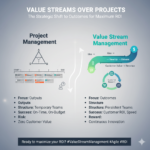
The goal is to move the authority to where the information lives. This is often referred to as Edge Computing for Organizations. * Empower Cross-Functional Cells: Create small, autonomous units that own a specific customer outcome (a “Value Stream”). Give them the budget and the mandate to pivot their tactics based on real-time feedback.
- Establish “Safe-to-Fail” Boundaries: Define the maximum “blast radius” for a decentralized decision. If a team’s choice could sink the company, it stays centralized. If the risk is manageable, let them run.
Strategy 3: Moving from “Reporting” to “Transparency”
Decentralization fails without radical transparency. If you are going to let teams move fast, you need a digital nervous system that allows you to see the results of their decisions in real-time without needing to call a meeting.
Shift your focus from weekly status reports (which look backward) to real-time dashboards (which look at the present). This allows you to intervene by exception rather than by default.
The CEO’s New Mandate
Your value is no longer measured by the brilliance of your individual choices, but by the velocity of the collective choices made by your organization. By decentralizing authority, you aren’t losing power; you are multiplying your organization’s capacity to sense, react, and win.
The question isn’t whether you can trust your people to make decisions—it’s whether you can afford the cost of them waiting for yours.
Would you like me to draft a set of “Decision-Making Guardrails” that you can use to start delegating specific strategic responsibilities to your executive team?
Share this content: