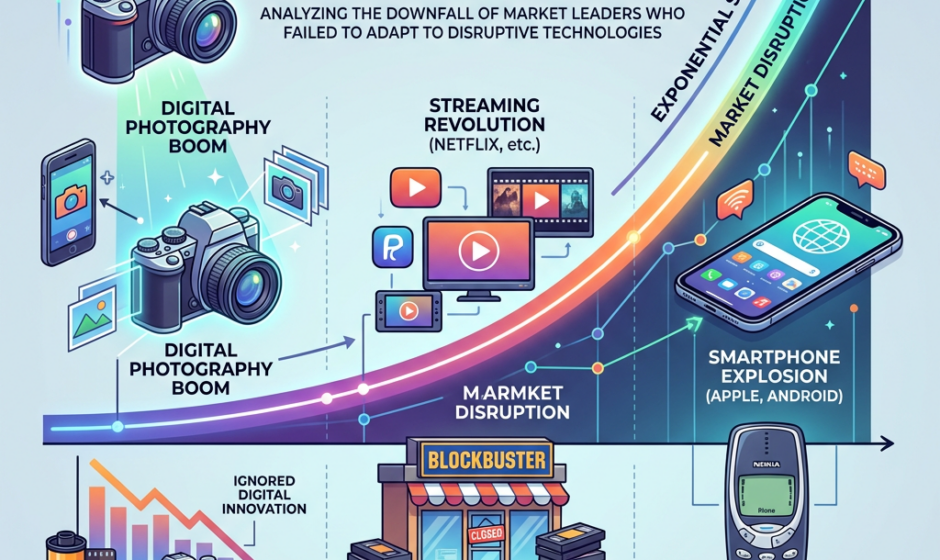

Kodak invented the digital camera. Blockbuster could have bought Netflix for fifty million dollars. Nokia dominated mobile hardware when smartphones were emerging. All three had the resources, the talent, and the market position to lead the next era. All three catastrophically failed to do so. Their stories are not cautionary tales about bad luck — they are precise case studies in strategic blindness.
The first lesson is that past success creates dangerous certainty. Each of these companies had optimized so effectively for their existing model that they treated exponential signals as noise rather than data. When evidence of disruption arrived, internal incentives rewarded defending the current revenue stream over exploring the next one.
The second lesson is that transformation requires cultural permission. Leadership in all three organizations understood intellectually that change was coming. The culture did not give them permission to cannibalize existing profits in pursuit of future relevance. Without that permission, strategy becomes paralysis dressed in meeting notes.
The third lesson is that exponential change does not give warning. It builds invisibly in the margins until it is suddenly everywhere. By the time Kodak, Blockbuster, and Nokia saw the full picture, the window for meaningful response had already closed. Modern business leaders must train themselves to act on weak signals before they become avalanches.
Share this content: