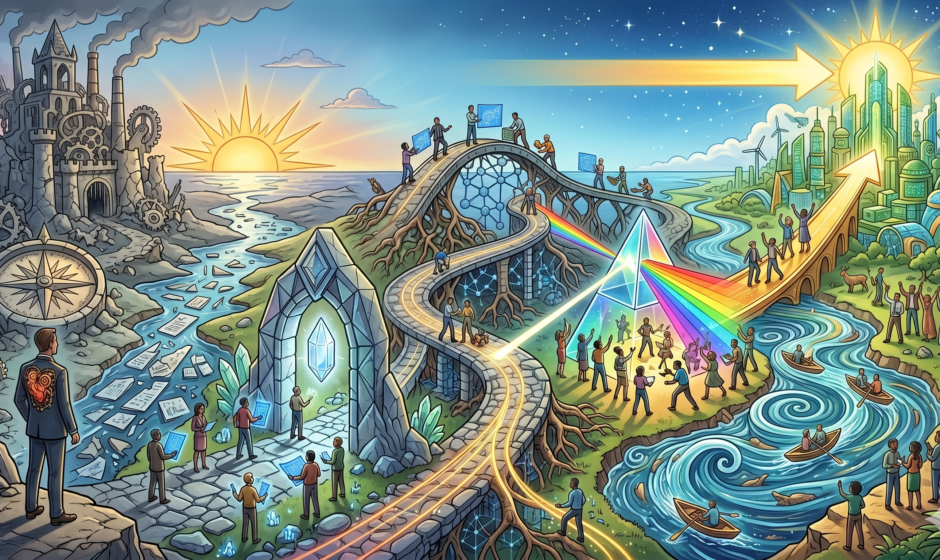

Most transformation efforts fail not because the vision is wrong but because there is no coherent roadmap connecting today’s reality to tomorrow’s ambition. CEOs routinely commission strategies that inspire but do not sequence, and without sequencing, even the best ideas collide into each other and stall.
A high-integrity transformation roadmap is built in three phases. The first is foundation — stabilizing core operations, aligning leadership on a shared definition of success, and establishing the measurement infrastructure that will track progress honestly. Without this phase, every subsequent initiative is built on sand.
The second phase is acceleration — deploying new capabilities, testing exponential business models, and embedding agile ways of working across the organization. This is where most CEOs want to start, and why most transformations underdeliver. Speed without foundation is just expensive chaos. The third phase is scaling — systematizing what works, retiring what doesn’t, and building the organizational reflexes that make continuous transformation a permanent capability rather than a one-time project.
Leadership alignment is not a soft prerequisite — it is the single most reliable predictor of transformation success. When the executive team disagrees on sequencing, every function optimizes for a different version of the future. The roadmap is what converts alignment from aspiration into architecture.
Share this content: