
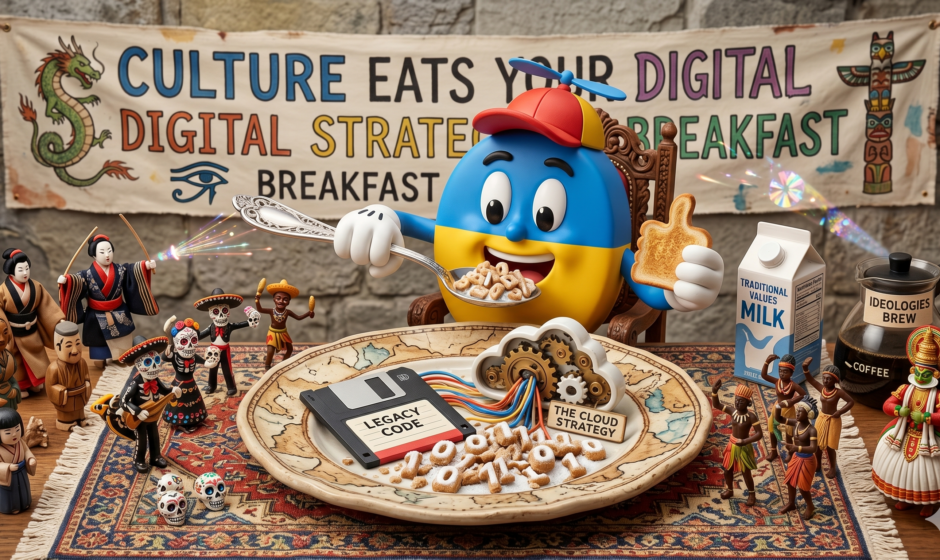

Peter Drucker’s famous line about culture eating strategy for breakfast has never been more relevant than it is today. Organizations are pouring millions into digital transformation initiatives, yet Gartner reports that nearly 70% of these efforts fail to meet their objectives. The technology isn’t the problem. The people are.
That’s not an insult. It’s a diagnosis.
When leaders launch a digital transformation, they typically focus on tools, platforms, and processes. They build roadmaps, hire consultants, and announce bold visions. What they underestimate is the invisible gravitational pull of existing culture. Deeply embedded habits, unspoken rules, and fear of obsolescence don’t disappear because you installed new software. They go underground, and that’s where the sabotage begins.
Employees slow-walk adoption. Managers protect legacy workflows. Middle leadership gives lip service to change while quietly maintaining the status quo. None of this is necessarily malicious. It’s human. People resist what threatens their identity and sense of competence. Until you address that emotional reality, your digital strategy remains a beautiful document collecting dust.
So what can leaders actually do? Here are three culture-hacking strategies that move the needle.
Strategy one: Make the old way more uncomfortable than the new way. Culture shifts when staying the same feels riskier than changing. Instead of just selling the vision of a digital future, leaders must transparently communicate the cost of standing still. Show teams what competitors are doing. Share data on declining efficiency. Make the burning platform visible without creating panic. Urgency isn’t manufactured through hype. It’s created through honest, grounded storytelling.
Strategy two: Build identity bridges, not just training programs. Traditional change management dumps new skills on people without addressing who they believe they are. A 20-year veteran doesn’t just need to learn a new system. They need to see themselves as someone who can master it. Leaders who invest in narrative-driven development, pairing new capabilities with recognition of existing expertise, create psychological safety for transformation. Help people see that adapting is a sign of strength, not surrender.
Strategy three: Reward early adopters visibly and loudly. Culture is shaped by what gets celebrated. If your fastest adopters receive the same recognition as resisters, you’ve sent a message that change doesn’t matter. Spotlight the employees who lean into new ways of working. Make their stories part of your internal communication rhythm. This isn’t about shaming laggards. It’s about demonstrating that the organization’s values have genuinely shifted, not just its vocabulary.
Digital transformation isn’t a technology project wearing a strategy hat. It’s a human change effort wearing a technology suit. The leaders who understand this distinction will outpace those who don’t, regardless of budget size or tool sophistication.
Your culture is either your greatest accelerant or your most expensive liability. The good news is that culture isn’t fixed. It’s a living system, and it responds to intentional leadership.
Ready to align your culture with your transformation goals? At Exponential Agility, we help leadership teams identify cultural blockers and build the conditions for lasting change. Book a discovery call today and let’s build momentum that actually sticks.
Share this content: